Skilled Trades, O2 & Co-Op - Community-Based Learning
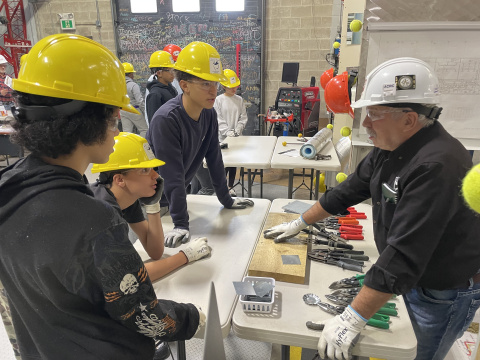
Community-based learning enhances student learning by bringing the community into the school and by placing students in the community as part of their studies. When the community provides context for learning, the authentic experiences engage students academically, combining real-world relevance with intellectual rigor, while promoting citizenship and preparing them to respect and live well in any community they choose.
Students benefit from the expertise, talent, and resources of community-based service agencies, business, citizen groups, entrepreneurs, families, industry, and organizations. They gain opportunities to apply and enhance, in tangible contexts, knowledge, skills, and attitudes acquired through their work in school. Community-based learning enhances students’ personal development, their sense of belonging to their community, and their understanding of community roles and responsibilities. Community-based experiences also help students develop skills described in the Conference Board of Canada’s Employability Skills (2000), including fundamental, personal management, and teamwork skills; specific career, occupation, and job skills; and labour market knowledge and understanding.
Often community-based learning is associated with programs such as Options and Opportunities (O2) and Skilled Trades, or courses such as Cooperative Education – in reality community-based learning experiences can take place at elementary, junior high, and senior high school. Guest speakers, field trips, tours, job shadowing, workshops, simulations, cooperative education placements, service learning and volunteering are all examples of community-based learning.
Learn more about the opportunities available through skilled trades here.
Cooperative Education courses are offered in 18 high schools in HRCE.
Cooperative Education helps students gain awareness and knowledge of career preparation, planning, and exploration. Cooperative Education prepares students to engage in employment and enables them to appreciate the skills, knowledge, and attitudes they currently possess; the skills, knowledge, and attitudes employers seek; and help them to identify and develop the key skills, knowledge, and attitudes necessary to a successful transition from school to the world of work or further study.
To participate in a Cooperative Education community-based placement, a student must be 16 years of age OR 15 years old and enrolled in Grade 11, and be socially ready for the independent nature of community placements. The decision on whether the student participates is the responsibility of the school. Risk management and due diligence must be practiced when making all decisions about putting a student in a Cooperative Education placement.
Students interested in taking Cooperative Education courses need to consult with the teacher responsible for delivering this course in their school. An application, references and an interview are required as outlined in the Community-Based Learning Policy for schools.
To visit Cooperative Education at the Department of Education and Early Childhood Development, click here.
Some students learn better by doing, experimenting and practicing. Students enrolled in the Options and Opportunities Program, better known as O2, participate in a focused, three-year high school path that includes career planning, hands-on learning, and participation in three Co-op work placements which can be aimed at exploring a variety careers based on student interest. O2 provides dedicated guidance and work experience to students who want to explore multiple career paths, and the Co-op experiences can count towards pre-apprenticeship hours when under the supervision of a registered journeyperson.
Some of the career pathways and programs explored by O2 students:
- Trades and Technologies
- Business and Education
- Health and Human Services
- Hospitality and Tourism
- Arts, Culture, and Recreation
- Information Technology (IT)
- Law Enforcement and Military
To visit Options and Opportunities at the Department of Education and Early Childhood Development, click here.
Click here for a printable PDF version of the FAQ.
What are the high school Skilled Trades course options?
The path usually starts with Skilled Trades 10 or Service Trades 10 (culinary). Students can then choose specialized Grade 11 courses like Construction Trades 11, Culinary Trades 11, Manufacturing Trades 11, or Transportation Trades 11. The final step is Skilled Trades Co-operative Education 12. This path lets students explore the trades first, then specialize in an area of interest before applying skills in a real workplace setting.
What is the Options & Opportunities (O2) program and how does it support students interested in skilled trades?
O2 is a focused, three-year high school path that includes career planning, hands-on learning, and participation in three Co-op work placements which can be aimed at exploring skilled trade careers. O2 provides dedicated guidance and work experience to students who want to explore multiple career paths and the Co-Op experiences can count towards pre-apprenticeship hours when under the supervision of a registered journeyperson.
How many pre-apprenticeship credit hours can a student earn through Co-Op?
Co-Op generally offers up to 80 credit hours toward a future registered apprenticeship with the Nova Scotia Apprenticeship Agency (NSAA) when the student is supervised by a registered journeyperson. These hours reduce the total time needed to complete an apprenticeship after high school. Students can take Co-Op class multiple times.
What is the Youth Apprenticeship Program in Nova Scotia and what is the process for a student to register?
A student aged 16-19 who has a part-time job in a skilled trade can register for free with the NSAA. They must submit a signed agreement with their employer to the agency. It allows a student to get paid and start officially tracking their required work hours before they graduate high school.
Is our school participating in the Nova Scotia High Skills Major (Pilot Program) and what are the sector focuses?
The provincial High Skills Major (HSM) pilot includes Skilled Trades as a focus area at Bay View High, Cole Harbour District High and Woodlawn High.
How does the High Skills Major translate into credit hours toward a registered apprenticeship?
A student earning a High Skills Major certificate will be awarded 200 pre-apprenticeship hours that can be applied to apprenticeship hours if the students registers as an apprentice or youth apprentice with the NSAA. Students can have a maximum of 500 pre-apprenticeship hours. These pre-apprenticeship hours are recognized by the NSAA and reduce the work hours required to complete a full apprenticeship.
How do the high school courses (Skilled Trades 10/11, Co-op) translate into credit hours toward a registered apprenticeship with the NSAA?
If taught by a certified journeyperson, Skilled Trades count for 110 hours and if supervised by a certified journeyperson, Co-Op for 80 hours of Pre-Apprenticeship hours that can be applied to apprenticeship hours if the students registers as an apprentice or youth apprentice with the NSAA. Students can have a maximum of 500 Pre-Apprenticeship hours. These high school credits are officially recognized by the NSAA and reduce the work hours required to complete a full apprenticeship.
What are the required or recommended academic courses a student must take to ensure they meet the entrance requirements for NSCC trade programs?
Most NSCC trade programs require a high school diploma and may have other requirements such as Grade 12 Academic or Applied Math and a Grade 11 or 12 Science credit depending on the program. Check NSCC’s admission requirements for each specific program for those requirements. Taking the right courses ensures students meet NSCC's entrance requirements and prevents delays after graduation.
What is the structure of the Building Futures for Youth (BFY), Serve it Up!, or Test Drive summer programs, and how many credits/apprenticeship hours do they provide?
These are competitive, intensive, paid summer Co-Op programs. They provide three high school Co-Op credits and up to 300 pre-apprenticeship hours for a 40 hour training and 200 hour work commitment in construction, culinary, or automotive trades. These highly valued programs offer the fastest way to gain significant credit hours and paid, professional work experience.
What is the process to apply for an official NSAA Apprentice ID Card while in high school?
If a student secures a job with a trade employer, they must complete an Apprenticeship Agreement online at the NSAA site, submit the form to the NSAA, and pay a small fee (under $20) for the ID card. The ID card is proof they are a registered apprentice, allowing them to officially track hours for the NSAA.
How are Co-Op work placements secured? Are the placements with certified journeypersons?
The school's Co-Op coordinator helps secure the placements. For the hours to count toward an apprenticeship, the placement must be with an employer where the mentor/supervisor is a certified journeyperson. Working with a journeyperson ensures the student receives high-quality, relevant training that is recognized by the trade system.
What mandatory safety training and certifications (like WHMIS, First Aid, or Construction Safety) are included in the high school skilled trades courses?
Students receive mandatory training in WHMIS (Workplace Hazardous Materials), Occupational Health & Safety (OH&S), and general shop and tool safety protocols. First Aid is strongly encouraged and sometimes provided. Safety credentials are non-negotiable and are often required before a student can even begin tools related activities in classes.
Are there any partnerships with local industry groups or organizations like Skills Canada – Nova Scotia that provide competitions or mentorship?
Yes. Industry groups like the Construction Association of Nova Scotia partner directly on programs like the summer co-op program Building Futures for Youth, (BFY), the Tourism Industry Association of NS for Serve it Up!, and the Automotive Sector Council of NS for TestDrive. Students are encouraged to participate in Skills Canada competitions to develop and showcase their abilities. These partnerships provide students with real-world connections, high-level mentorship, and opportunities to win scholarships.
What can I do if my child wants a skilled trades course that isn’t offered at their high school?
Students can apply for an out-of-area transfer to another high school (note: some high schools are at capacity and do not accept out-of-area transfers) to take Skilled Trades programming, but there must be an available seat in the course.
Why are Skilled Trades classes capped at only 16 students?
This cap is strictly for safety and supervision. In a high-risk shop or kitchen environment, a teacher must be able to see every student at all times. A smaller class also ensures there are enough workstations and tools for everyone to be active. Unlike a regular classroom, a shop or kitchen requires "eyes-on" supervision for every cut or weld. A cap of 16 also ensures the teacher can provide one-on-one safety checks and that no student is left waiting for equipment.
Click here for a printable PDF version of the glossary.
- Community-based Learning: An educational method that uses real-world community engagement to apply classroom knowledge and develop civic skills.
- Skilled Trades Careers: Jobs that involve specialized, hands-on skills used to build, repair, install, and/or maintain. These careers typically require an apprenticeship, technical training and/or a college program rather than a traditional university degree.
- Skilled Trades Courses: High school courses in Nova Scotia where you learn by doing. You spend 80% of your time working with your hands using real tools and only 20% of your time learning theory. These classes help you practice trades skills like building, fixing engines, or cooking.
- Technology Education: High school courses that develop problem-solving and technical literacy through hands-on activities, often including trades-related courses.
- Options and Opportunities (O2): A three-year high school program providing focused career exploration through extensive community-based and work experiences.
- Nova Scotia High Skills Major: A high school certificate recognizing students who have completed focused courses and experiences within a specific sector, such as Skilled Trades.
- Co-Operative Education (Co-Op): A high school course where students earn credit by combining classroom learning with an 80-hour supervised work placement in the community.
- Journeyperson: A tradesperson who is certified and fully qualified in a trade, authorized to train and supervise apprentices.
- Apprenticeship: The formal training system that combines paid, supervised on-the-job experience with required periods of theoretical Technical Training.
- Nova Scotia Apprenticeship Agency (NSAA): The provincial government agency managing and administering the trades training and certification system.
- Technical Training: The required in-class, theoretical instruction component of an apprenticeship, typically delivered at a college or training centre.
- myBlueprint: The approved provincial online tool used by students for career planning and portfolio development.
- Pre-apprenticeship: Pre-apprenticeship is a training program that prepares people with the basic skills and experience needed to start an apprenticeship in the skilled trades. Pre-apprenticeship hours can be counted toward a future apprenticeship.